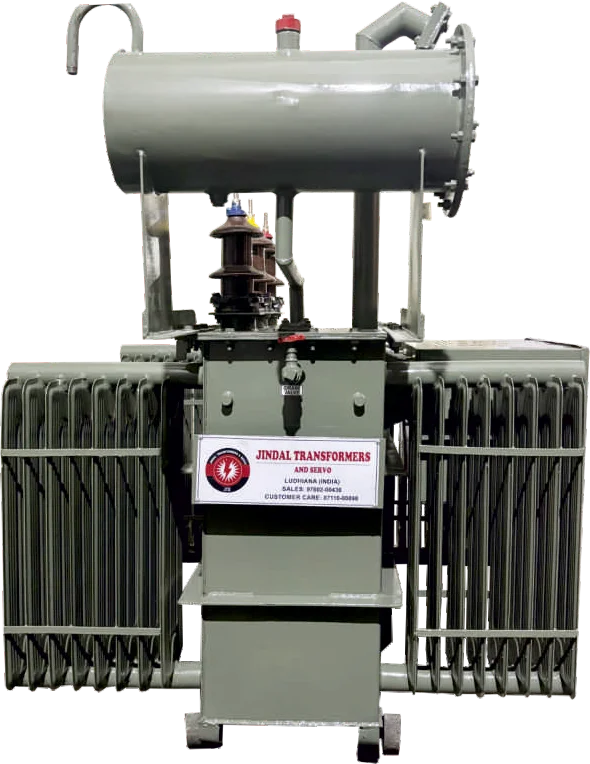
A transformer is a static device that transfers alternating current (AC) electricity between circuits at the same frequency, typically varying the voltage level. For economic reasons electrical energy is transmitted at high voltage and used at low voltage for safety. This voltage adjustment is achieved using a step-up transformer, which increases the output voltage contrast, a step-down transformer converts high voltage (H V) and low current from the primary side to low voltage (LV) and high current on the secondary side.
Key features
- The output voltage of a step-down transformer is lower than the source voltage.
- The primary winding is HV, and the secondary is LV.
- The secondary voltage is less than the primary voltage.
- The primary winding has more turns than the secondary.
- The secondary current is higher than the primary current.
- Step-down transformers are used in power distribution, such as those in residential areas.
- Built with durable materials for long-lasting performance.
- Operates with minimal sound, enhancing working environment.