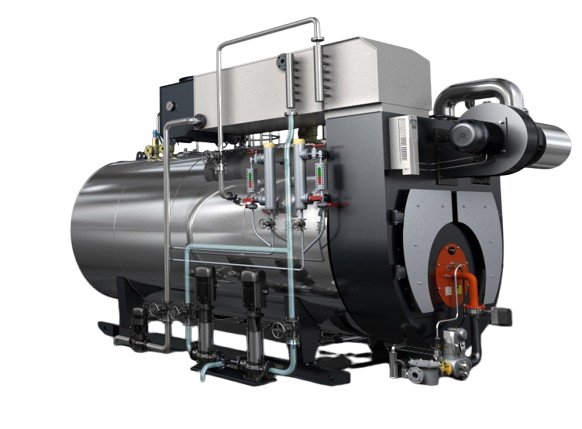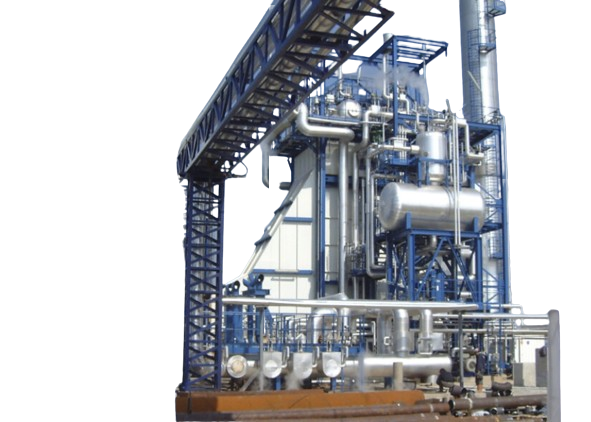

A Heat Exchanger is a device designed to transfer thermal energy between two or more fluids without mixing them. Widely used in industrial processes, it enhances energy efficiency by recovering waste heat, preheating fluids, or cooling systems. PP Boilers’ heat exchangers are engineered for durability and optimal performance in demanding environments.
Details
PP Boilers manufactures robust heat exchangers tailored for applications in boilers, power plants, and industrial heating/cooling systems. These devices facilitate efficient heat transfer through conduction and convection, ensuring minimal energy loss. Key design aspects include:Types: Shell-and-tube, plate, and finned-tube configurations.Materials: Stainless steel, carbon steel, or corrosion-resistant alloys.Integration: Compatible with boilers, economizers, and condensers.Compliance: Built to meet IBR and ISO standards for safety and reliability.
A Heat Exchanger is a device designed to transfer heat between two or more fluids (liquids or gases) without mixing them. PP Boilers specializes in custom-engineered heat exchangers for industrial applications, enhancing energy efficiency and process optimization in thermal systems.
Design & Functionality:
Facilitates heat transfer between fluids (e.g., steam-to-water, gas-to-air) through conductive surfaces like tubes or plates.
Used for heating, cooling, condensation, or heat recovery in industrial processes.
Materials include carbon steel, stainless steel, or alloys for corrosion resistance and durability.
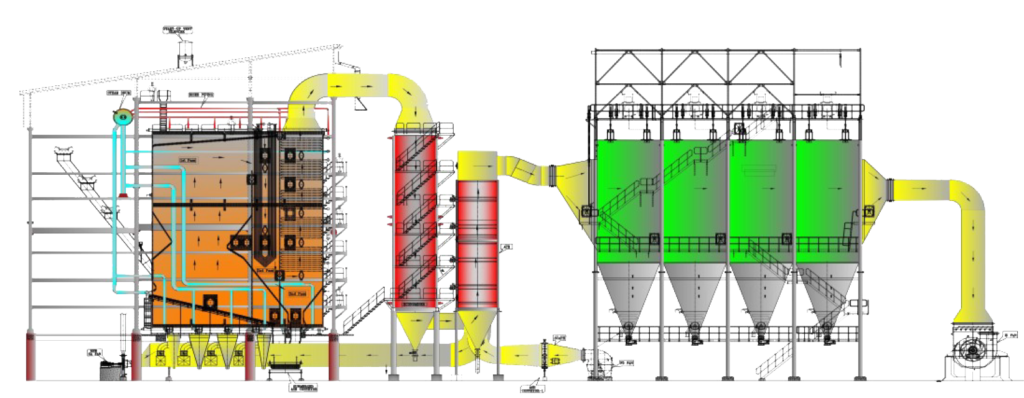
Integration: Often paired with boilers, economizers, or air pre-heaters to maximize system efficiency.
Key Points
- Robust Construction: Built with corrosion-resistant materials for longevity.
- Advanced Burner Design: Ensures complete fuel combustion.
- Automated Safety Systems: Includes flame failure alarms and emergency shutdowns.
- Compact Footprint: Space-efficient design for easy installation.
- Customizable: Tailored to meet specific temperature and capacity requirements.
- Versatile Designs: Shell-and-tube, plate, air-cooled, or finned-tube configurations.
- Material Options: Carbon steel, SS 304/316, titanium, or duplex steel for harsh environments.
- Energy Recovery: Captures waste heat from flue gases or exhaust streams.
- Compact Construction: Space-efficient designs for retrofitting existing systems.
- IBR Compliance: Pressure parts adhere to Indian Boiler Regulations.
- Customization: Tailored to flow rates, temperature gradients, and pressure drops.
- Low Maintenance: Easy access for cleaning and inspection.
- Corrosion Resistance: Protective coatings or material selection for longevity.
- EPC Integration: Part of PP Boilers’ end-to-end thermal solutions.
- Global Standards: Meets ASME, TEMA, and ISO certifications.
Features
Heat exchangers are devices that facilitate the transfer of heat between two or more fluids at different temperatures. They are essential components in various industrial processes, including heating, cooling, and heat recovery. Heat exchangers work by separating the fluids with a solid wall, allowing heat transfer without direct mixing.
- Types: Heat exchangers come in various types, including shell and tube, plate, and finned tube exchangers, each suited for specific applications and fluid characteristics.
- Heat Transfer Mechanisms: They utilise conduction and convection to transfer heat between fluids. Heat conduction occurs through the solid wall separating the fluids, while convection facilitates heat transfer within the fluids themselves.
- Efficiency: The efficiency of a heat exchanger depends on factors like the heat transfer area, temperature difference between fluids, flow rates, and the type of heat exchanger.
- Material Selection: The materials used in heat exchangers are crucial, considering factors like corrosion resistance, thermal conductivity, and pressure requirements.
- Applications: They are widely used in various industries, including power generation, chemical processing, HVAC, food processing, and refrigeration.